 By SkyBloomIT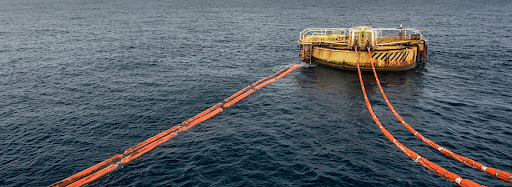
Logistics of offshore oil and gas require the use of reliable mooring systems that are able to safely hold massive tankers in open waters. The Single Point Mooring (SPM) system is one of the most effective systems in the world. Over the years, I have been conducting research on the maritime infrastructure and offshore operations, and I have witnessed the significance of such equipment as the Steel Mooring Buoys – Jerryboeg Marine in ensuring effective and safe transport of energy. These systems enable the tankers to load/unload cargo without docking at a traditional port, and this will reduce congestion and increase operational flexibility, allowing industry professionals and researchers to read more about how offshore transfer systems improve global energy logistics.
To comprehend the operation of a single-point mooring offshore, it is necessary to examine some of its components, the engineering principles, and the actual operation processes. A systematic analysis of the functionality of these offshore systems is given below.
Steel Mooring Buoys – Jerryboeg Marine: The Heart of Offshore Mooring Systems.
The buoy is at the centre of any single-point mooring system. Steel Mooring Buoys – Jerryboeg Marine are of high quality and designed to be able to hold huge loads but still be stable even when in harsh oceanic conditions. Readers interested in technical insights about offshore mooring infrastructure can read more about how these buoy systems are engineered for demanding marine environments.
These buoys serve as a floating anchor to which tankers are attached in the offshore operations to load or offload. They are reinforced with marine-grade steel and resistant to corrosion coating to make them last longer in a salty atmosphere. In most of the contemporary installations, the buoy is linked to the subsea pipelines, which convey crude oil, LNG, or refined products directly from offshore fields to the vessels. Industry professionals and researchers often read more about these offshore transfer systems to better understand how subsea pipelines and buoy structures work together in modern SPM operations.
Regarding the longevity of the entire SPM system, during my professional observations of the offshore infrastructure projects, the longevity of the buoy structure predetermines the longevity of the whole system. Properly designed steel buoys will minimise the maintenance expenses and guarantee the safe operation in the long term.
Technically, prospective readers may refer to more information on steel mooring buoys – Jerryboeg Marine at the following:
The practice of single-point mooring offshore operations.
Offshore operations, single-point mooring operations, have a systematic process that aims at maximizing safety and efficiency. Tugboats and support vessels are used to direct a tanker toward the offshore location when it is coming to the offshore facility.
After the vessel is at the right position, a mooring hawser is attached to the tanker, and this is attached to the buoy. This relationship enables the ship to rotate freely with the changes in wind and current. This is an inherent alignment that does a great job of lowering the stress exerted on both the vessel and the mooring system.
The buoy itself is held in position at the seabed by chains, anchors, or piles. Under the buoy, there is a rotating construction known as a swivel that enables the flow of fluid on the pipelines without bending the hoses attached to the vessel. Oil or gas that comes out of subsea pipelines is carried to the cargo system of the tanker using flexible hoses.
This design is an extreme improvement in operation efficiency over the fixed jetties, as observed in my experience reviewing offshore logistics case studies. The tankers are able to be used in the deeper waters where the normal ports are not able to be built.
The offshore mooring systems engineering components.
A single-point mooring system is made up of a few engineering components, which all operate as a single system.
The first one is the mooring buoy, which is the primary floating system. Second comes the anchor chains and seabed anchoring system, and this ensures that the buoy is well anchored even during high currents or storms. Third are the floating and submarine hoses whose role is to transport crude oil or other liquids in a safe manner between pipelines and ships.
The swivel stack is another important component because it enables the buoy to swivel whilst keeping the fluid flowing. In the absence of this factor, hoses would get twisted and malfunction in the process.
Wave forces, wind loads, and corrosion factors are also to be taken into account by offshore engineers when they come up with these systems. Steel structures like Steel Mooring Buoys – Jerryboeg Marine are designed to high quality in order to comply with the international standards of maritime safety.
Single Point Mooring benefits in offshore energy operations.
Single-point mooring technology has a number of benefits to offshore industries. Operational flexibility is one of the key advantages. Depending on the size of tankers, they can be attached to the same buoy system without any elaborate docking infrastructures.
The other significant benefit is cost-effectiveness. The construction of deep-water ports is very costly, whereas offshore mooring can be placed nearer to the production fields. This saves on time in transportation and infrastructure expenditure.
It also enhances environmental safety. The new mooring systems have leakage identification systems, emergency shutdown systems, and reinforced hose connections. These characteristics minimise the chances of spillage when transfer is being done offshore.
In my study of the energy transportation systems of the world, SPM systems have been extensively applied in places such as the Middle East, Southeast Asia, and West Africa, where offshore production areas are situated far away from the coastal ports.
New Technology in Offshore Mooring.
Offshore logistics is taking a direction towards smarter and automated mooring systems. Tension loads, weather, and stability of buoys are now monitored in real time through advanced monitoring sensors. These technologies enable operators to identify potential problems in advance before they escalate into operational failures.
The manufacturers are also enhancing the steel alloys, coatings, and structural design in order to increase the lifespan of the mooring equipment. Firms that manufacture Steel Mooring Buoys – Jerryboeg Marine are still investing in better materials and safer engineering concepts to support increased offshore demands.
Due to the growth of offshore energy production at deeper waters, the significance of single-point mooring systems that are dependable will continue to increase. To maritime engineers, researchers, and industry personnel, it would be paramount to know how these systems operate in order to have a safe and efficient offshore operation.
Final Thoughts
Single-point mooring systems involve greater efficiency and safety regarding offshore oil transfer. Long-term solutions, such as Steel Mooring Buoys – Jerryboeg Marine are stable and reliable to use with tankers in deep water. With the growth of the offshore operations, powerful mooring technology will continue to provide an easy and safe method of energy transportation.